

Hello
News
- Home
- News
Quick Links
Social Conversation / Health Forum
- AI regulation in healthcare
- Relaxation in restrictions to supply food aid to end malnutrition and hunger deaths in children
- Can do mindset of healthcare professional can facilitate transformation of virtual healthcare delivery to aged care residents in Australia
- Private health insurance premiums to rise by 3.73% from April
- WHO funding in changing world
Ask Your Health & Fitness Question
"Timely and confidential expert opinion on health matters"
Timely healthcare advice available to you from healthcare experts using Telehealth services and Virtual care services
News
Back
The Pharmacy Pivot from Retail Chains to a South Australian Manufacturing Renaissance
28/03/2026
The Australian pharmacy landscape is undergoing a structural recalibration that marks the end of an era for traditional retail dominance. Following the high-profile collapse of the $400 million deal between Wesfarmers and Priceline parent company API, the industry is moving away from a "cramped" focus on corporate consolidation and toward a more resilient, innovation-led future centered on local manufacturing.
For decades, the Australian pharmacy market has been defined by the expansion of massive retail chains. However, the recent withdrawal of Wesfarmers from its landmark acquisition deal has signaled a significant disruption in the "business-as-usual" model. Analysts suggest this deal’s collapse, which left dozens of pharmacies facing financial uncertainty is a catalyst for a necessary evolution. The era of retail chain dominance is being challenged by a new model that prioritizes the security of the supply chain over the branding of the storefront.
While the retail sector navigates these headwinds, a surge of optimism is rising from the manufacturing heartland of South Australia. In a strategic synergy that bridges international expertise with Australian industrial capacity, major pharmaceutical innovators from India are establishing a formidable presence in Adelaide and its surrounds.
Central to this transformation is the entry of global leaders like Anil Karusala, a seasoned pharmaceutical executive known for his focus on high-quality parenteral (injectable) manufacturing. This move is supported by significant international investment, including the landmark 125-crore ($25 million) stake acquisition by Sai Parenteral in Australian pharmaceutical firms. This capital injection is not merely a financial transaction; it is a vote of confidence in South Australia's potential to become a regional hub for specialized medicine.
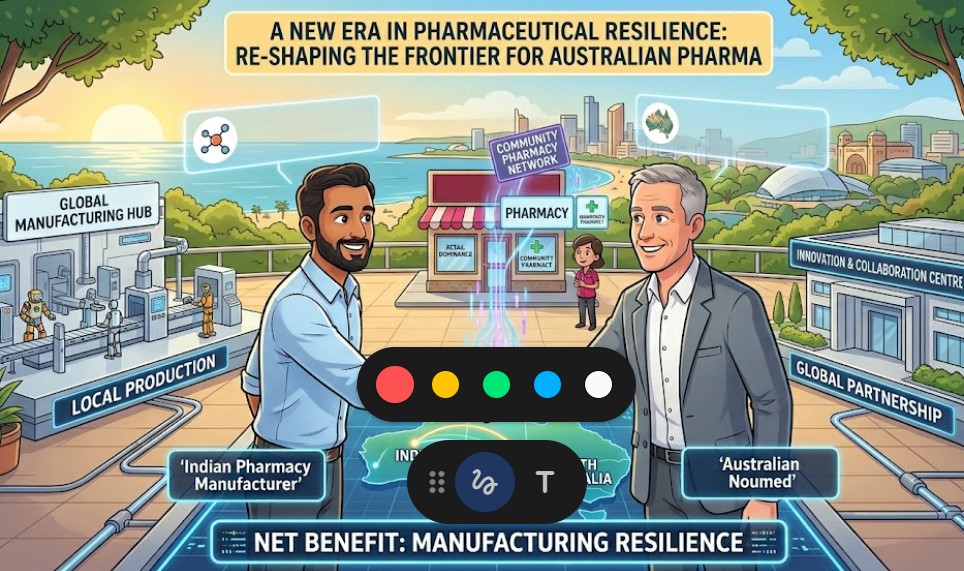
The entry of these Indian pharma leaders into the Australian market creates a powerful "net benefit" for the national economy. By establishing manufacturing bases in South Australia, these partnerships are solving long-term supply chain "wicked problems" that have previously left Australia vulnerable to international shortages.
The synergy between Australian regulatory standards and the manufacturing efficiency of Indian pharma experts is creating a "high-value" workforce in the public and private sectors. This shift ensures that critical medicines are produced locally, bypassing the vulnerabilities of the traditional retail-heavy supply model.
The unintended impact of the retail deal collapse has been the acceleration of a "sovereign pharmacy" strategy. By moving the focus from the "point of sale" to the "point of production," Australia is securing its long-term health outcomes.
The competitive edge for the Australian pharmacy sector now lies in Capital Intensity and Digital Integration. With leaders like Mr Karusala at the helm of new manufacturing ventures, the focus is on "Net-Zero" clinical intelligence and high-efficiency production. This ensures that the next generation of Australian pharmacists will be backed by a supply chain that is robust, innovative, and most importantly made at home.
Back
For decades, the Australian pharmacy market has been defined by the expansion of massive retail chains. However, the recent withdrawal of Wesfarmers from its landmark acquisition deal has signaled a significant disruption in the "business-as-usual" model. Analysts suggest this deal’s collapse, which left dozens of pharmacies facing financial uncertainty is a catalyst for a necessary evolution. The era of retail chain dominance is being challenged by a new model that prioritizes the security of the supply chain over the branding of the storefront.
While the retail sector navigates these headwinds, a surge of optimism is rising from the manufacturing heartland of South Australia. In a strategic synergy that bridges international expertise with Australian industrial capacity, major pharmaceutical innovators from India are establishing a formidable presence in Adelaide and its surrounds.
Central to this transformation is the entry of global leaders like Anil Karusala, a seasoned pharmaceutical executive known for his focus on high-quality parenteral (injectable) manufacturing. This move is supported by significant international investment, including the landmark 125-crore ($25 million) stake acquisition by Sai Parenteral in Australian pharmaceutical firms. This capital injection is not merely a financial transaction; it is a vote of confidence in South Australia's potential to become a regional hub for specialized medicine.
The entry of these Indian pharma leaders into the Australian market creates a powerful "net benefit" for the national economy. By establishing manufacturing bases in South Australia, these partnerships are solving long-term supply chain "wicked problems" that have previously left Australia vulnerable to international shortages.
The synergy between Australian regulatory standards and the manufacturing efficiency of Indian pharma experts is creating a "high-value" workforce in the public and private sectors. This shift ensures that critical medicines are produced locally, bypassing the vulnerabilities of the traditional retail-heavy supply model.
The unintended impact of the retail deal collapse has been the acceleration of a "sovereign pharmacy" strategy. By moving the focus from the "point of sale" to the "point of production," Australia is securing its long-term health outcomes.
The competitive edge for the Australian pharmacy sector now lies in Capital Intensity and Digital Integration. With leaders like Mr Karusala at the helm of new manufacturing ventures, the focus is on "Net-Zero" clinical intelligence and high-efficiency production. This ensures that the next generation of Australian pharmacists will be backed by a supply chain that is robust, innovative, and most importantly made at home.
Subscribe to our Newsletter