

Hello
News
- Home
- News
Quick Links
Social Conversation / Health Forum
- AI regulation in healthcare
- Relaxation in restrictions to supply food aid to end malnutrition and hunger deaths in children
- Can do mindset of healthcare professional can facilitate transformation of virtual healthcare delivery to aged care residents in Australia
- Private health insurance premiums to rise by 3.73% from April
- WHO funding in changing world
Ask Your Health & Fitness Question
"Timely and confidential expert opinion on health matters"
Timely healthcare advice available to you from healthcare experts using Telehealth services and Virtual care services
News
Back
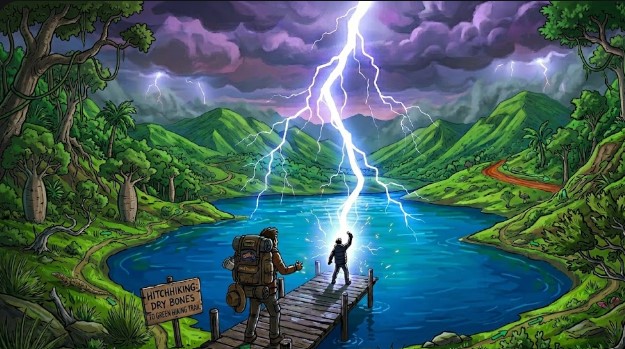
Jane Doe or a John Doe stuck by a lightning strike with burnt digital ID
11/04/2026
As climate patterns shift, Australia is experiencing more intense and frequent electrical storms. Data from the Bureau of Meteorology (BOM) indicates that while northern Australia remains the lightning capital, secondary peaks in Southeast Queensland and New South Wales are increasingly impacting densely populated and remote areas alike. For a nation where 27% of the population lives in regional or remote communities, a lightning strike is not just a weather event but it is a critical "wicked problem" of geography, physics, and medical access.
A lightning strike is a massive discharge of energy that interacts with the human body in several ways. While a direct strike is the most lethal, the Australasian College for Emergency Medicine notes that ground current and side flashes are more common causes of multiple-casualty incidents.One of the most distinct medical phenomena associated with lightning is Keraunoparalysis, a temporary "stunning" of the nervous and muscular systems that can cause limb paralysis and sensory loss. While often transient, it can complicate the "DRSABCD" first aid response by making a patient appear more injured than they are, or conversely, masking internal cardiac disturbances.
A recent 2026 incident in Denver, Colorado, has highlighted a modern complication in lightning trauma. A woman struck on a walking path remained unidentified for days because the lightning strike did not just stop her heart but it also obliterated her mobile phone, rendering the electronics inoperable and the SIM card unreadable.
In the Australian context, where solo hikers and workers often traverse remote areas, this "digital destruction" poses a significant barrier to timely specialist access. If a patient is unconscious and their primary digital ID (phone) is destroyed, establishing medical history or notifying next-of-kin becomes a secondary emergency.
In most mass-casualty events, those who are not breathing are often triaged last. Lightning injuries are the exception. According to St John WA and the Queensland Ambulance Service, victims who appear "dead" but potentially in a respiratory or cardiac arrest should be treated first which is a Reverse Triage principle that applies in Lightning injury circusmtances.
As a part of first aid repsonse to lightning injury victims-
For patients in "MM7" (Very Remote) communities, the "Golden Hour" of trauma care is often a logistical impossibility. To combat this, ACEM and regional health boards are leveraging Digital Health Integration and promoting Tele-Trauma. Specialist emergency physicians in Brisbane or Perth now provide real-time guidance to rural nurses and GPs via satellite links.
Organizations like the RFDS are equipped with advanced cardiac monitoring to manage the arrhythmias and "autonomic storms" common in the 24–48 hours post-strike.Secondary Sequelae: Beyond the initial shock, patients require access to specialists for "silent" injuries, such as tympanic membrane perforation (burst eardrums) and cataracts, which can develop months after the thermal radiation of a strike.
The recent 2026 Perth storms, which saw four people struck in a single morning, serve as a reminder that lightning is a low-frequency but high-impact threat. We must move toward a model of "Geographic Equity" in emergency care.This requires "Universal First Aid Training". Every Australian, especially in rural areas, should be proficient in CPR. Hikers and remote workers should be encouraged to carry physical ID or "medic-alert" bracelets, acknowledging that a smartphone is a fragile lifeline in a storm. The next step is to ensure all regional hospitals have the diagnostic tools including ECGs and neurological monitoring to identify the long-term impacts of a lightning strike.
The energy of the stars is all around us, but when it touches the Earth, it demands our utmost respect and a coordinated, multi-disciplinary response to save lives.
Back
A lightning strike is a massive discharge of energy that interacts with the human body in several ways. While a direct strike is the most lethal, the Australasian College for Emergency Medicine notes that ground current and side flashes are more common causes of multiple-casualty incidents.One of the most distinct medical phenomena associated with lightning is Keraunoparalysis, a temporary "stunning" of the nervous and muscular systems that can cause limb paralysis and sensory loss. While often transient, it can complicate the "DRSABCD" first aid response by making a patient appear more injured than they are, or conversely, masking internal cardiac disturbances.
A recent 2026 incident in Denver, Colorado, has highlighted a modern complication in lightning trauma. A woman struck on a walking path remained unidentified for days because the lightning strike did not just stop her heart but it also obliterated her mobile phone, rendering the electronics inoperable and the SIM card unreadable.
In the Australian context, where solo hikers and workers often traverse remote areas, this "digital destruction" poses a significant barrier to timely specialist access. If a patient is unconscious and their primary digital ID (phone) is destroyed, establishing medical history or notifying next-of-kin becomes a secondary emergency.
In most mass-casualty events, those who are not breathing are often triaged last. Lightning injuries are the exception. According to St John WA and the Queensland Ambulance Service, victims who appear "dead" but potentially in a respiratory or cardiac arrest should be treated first which is a Reverse Triage principle that applies in Lightning injury circusmtances.
As a part of first aid repsonse to lightning injury victims-
- Try and ensure the storm has passed or move to a safer area.You cannot be "electrocuted" by touching a victim as they do not hold a charge.
- Call Triple Zero (000). Use a satellite phone or emergency beacon if in a "black spot.
- Start CPR immediately if victim is showing signs of cardiorespiratory arrest.
- Ventilation to support breathing is the critical prognostic factor as Lightning often stops the heart, but the heart may restart itself while the "respiratory center" in the brain remains paralyzed.
For patients in "MM7" (Very Remote) communities, the "Golden Hour" of trauma care is often a logistical impossibility. To combat this, ACEM and regional health boards are leveraging Digital Health Integration and promoting Tele-Trauma. Specialist emergency physicians in Brisbane or Perth now provide real-time guidance to rural nurses and GPs via satellite links.
Organizations like the RFDS are equipped with advanced cardiac monitoring to manage the arrhythmias and "autonomic storms" common in the 24–48 hours post-strike.Secondary Sequelae: Beyond the initial shock, patients require access to specialists for "silent" injuries, such as tympanic membrane perforation (burst eardrums) and cataracts, which can develop months after the thermal radiation of a strike.
The recent 2026 Perth storms, which saw four people struck in a single morning, serve as a reminder that lightning is a low-frequency but high-impact threat. We must move toward a model of "Geographic Equity" in emergency care.This requires "Universal First Aid Training". Every Australian, especially in rural areas, should be proficient in CPR. Hikers and remote workers should be encouraged to carry physical ID or "medic-alert" bracelets, acknowledging that a smartphone is a fragile lifeline in a storm. The next step is to ensure all regional hospitals have the diagnostic tools including ECGs and neurological monitoring to identify the long-term impacts of a lightning strike.
The energy of the stars is all around us, but when it touches the Earth, it demands our utmost respect and a coordinated, multi-disciplinary response to save lives.
Subscribe to our Newsletter